Your Sharpest Growth Team Is Already on Your Invoice List
Photo: Francisclarke, CC BY-SA 4.0, via Wikimedia Commons
Most founders have a guilty habit. They spend Monday morning staring at the pipeline, wondering where the next ten customers will come from, while the ten customers they already have sit quietly on the invoice list with opinions they would happily share for free. Not complaints. Not praise. Actual intelligence about what to build next, what to stop doing, and why your best account nearly walked last quarter.
The fix isn't a survey. It isn't a Facebook group. It's a customer council — a small, structured group of your best buyers who meet a few times a year to pressure-test your thinking. Done properly, it costs you a meeting room, some sandwiches and a couple of hours of your time. Done badly, it becomes a moanfest or a second sales floor. The difference is in the setup.
Why ten is the magic number
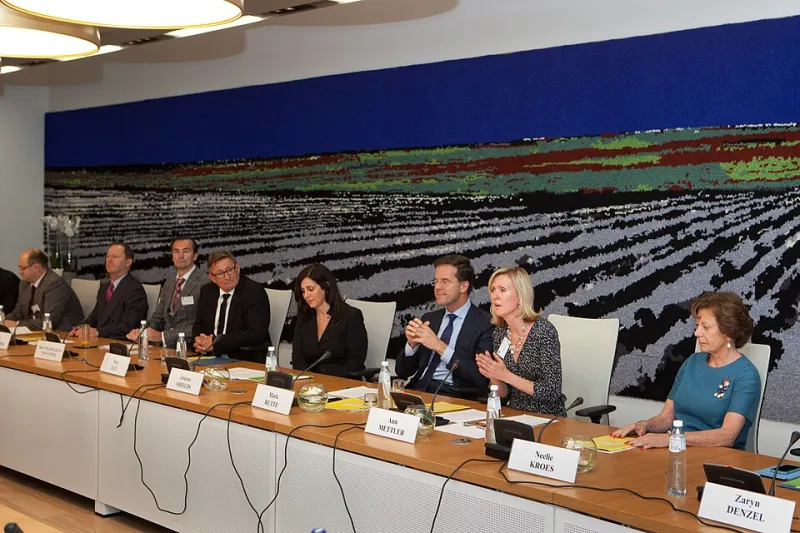
A customer advisory board works because it is small enough to be useful and big enough to be honest. Ten people will give you a spread of views without turning into a town hall. They can disagree with each other. They can spot patterns you miss. And they can tell you, without meaning to, which parts of your offer are doing the heavy lifting and which are just noise.
There's a commercial angle too. Buyers who feel listened to churn less. Buyers who meet each other start to see your firm as a network, not just a supplier. And buyers who help shape a product tend to tell other people about it. You are not paying consultancy fees. You are paying attention.
What it is not
Let's clear this up before you send the invites. A customer council is not a focus group run by a research agency. It is not a user conference with a bar tab. And it is definitely not a chance to preview your new pricing page and hope nobody notices the increase.
The moment your customers smell a pitch, the honesty drains out of the room. They start performing. They say what they think you want to hear. You leave with a warm feeling and no useful information. The council only works if the deal is clear: you give them influence, they give you candour. No sales deck. No upsell. Not in the room.
The 90-day setup plan
Days 1–30: Pick your ten. Go for a mix, not a fan club. You want three or four of your biggest accounts, three or four long-standing mid-tier customers, and a couple of people who have pushed back on you in the past. Include at least one customer who uses your product or service in a way you didn't expect. Avoid anyone who is currently in a live negotiation. Send a personal invite, not a mailshot. Explain the commitment: two sessions a year, one hour of pre-reading, honesty required.
Days 31–60: Build the first agenda. Do not ask 'what do you think of us?' That question produces polite nonsense. Ask three specific things instead. What nearly stopped you buying from us? What would make you leave? What is the one job you wish we did for you? Send a one-page pre-read a week before. Keep it short. If they have to print it, you've lost them.
Days 61–90: Run the room and close the loop. Two hours, max. One facilitator, one note-taker, no laptops. Start with a round of introductions and a clear statement that nothing said will be used in a sales conversation. Then work through the questions. Let silence sit for a few seconds. The best comments usually arrive after the first answer.
Within a week, send a one-page summary to everyone in the room. Tell them what you heard, what you are going to do, and what you are not going to do. That last part matters. Nothing kills a council faster than a founder who nods along and then ignores the feedback.
What you actually get back
A good council will surface product ideas you would have paid a consultancy to find. One Yorkshire food producer we spoke to used its council to spot that its best-selling wholesale line was being bought by smaller retailers who wanted a mixed pallet. That single insight became a new route to market. A Bristol software firm discovered that two of its ten council members were about to churn over the same missing integration. They fixed it in six weeks. A Glasgow agency used its council to test a retainer model before rolling it out to the wider base.
None of those discoveries came from a big data project. They came from asking ten people the right questions and then listening.
The mistakes that kill it
Inviting too many people. Twelve is a crowd. Twenty is a conference. Ten is a conversation.
Letting sales own the room. Your sales director should not run the council. They will steer it towards pipeline. Let someone neutral facilitate — a founder, an ops lead, or an outside chair if you have one.
Skipping the feedback loop. If customers give you their time and hear nothing back, they will not come to the second session. Send the summary. Act on one thing visibly. Then tell them you did it.
Forgetting to say thank you. A nice meal, a decent bottle, a handwritten note. It doesn't need to be expensive. It needs to be genuine.
The cheapest growth team you'll ever assemble
In 2026, with acquisition costs still climbing and every competitor chasing the same search terms, the accounts you already have are your most underused asset. Ten customers, two sessions a year, one honest agenda. That's not a focus group. That's a growth team that pays for itself in the first meeting.
You don't need a consultancy. You don't need a new hire. You need to stop guessing what your best buyers are thinking and start asking them. The invoice list is already there. The opinions are already there. All you have to do is book the room.